
Inside Mbaru Niang: Secrets of the Iconic Wae Rebo Traditional Houses
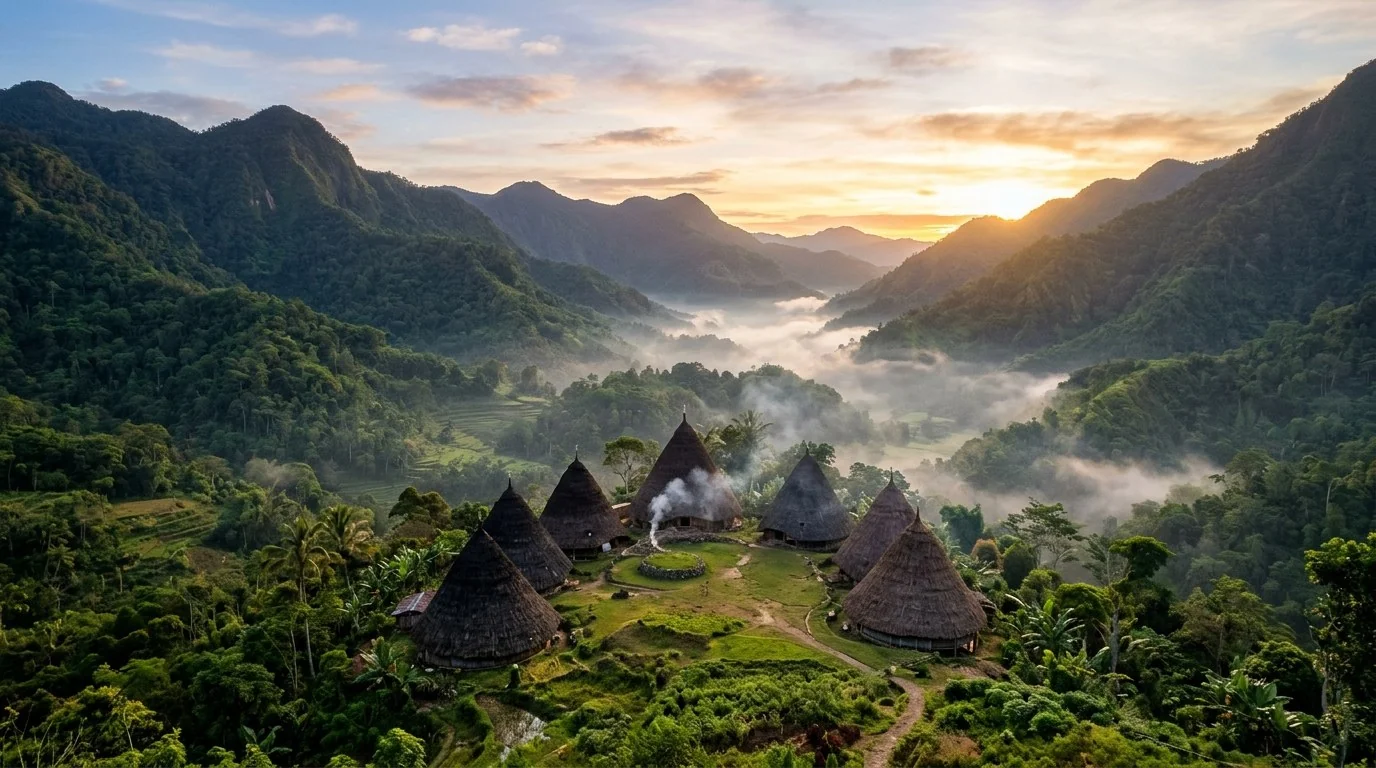
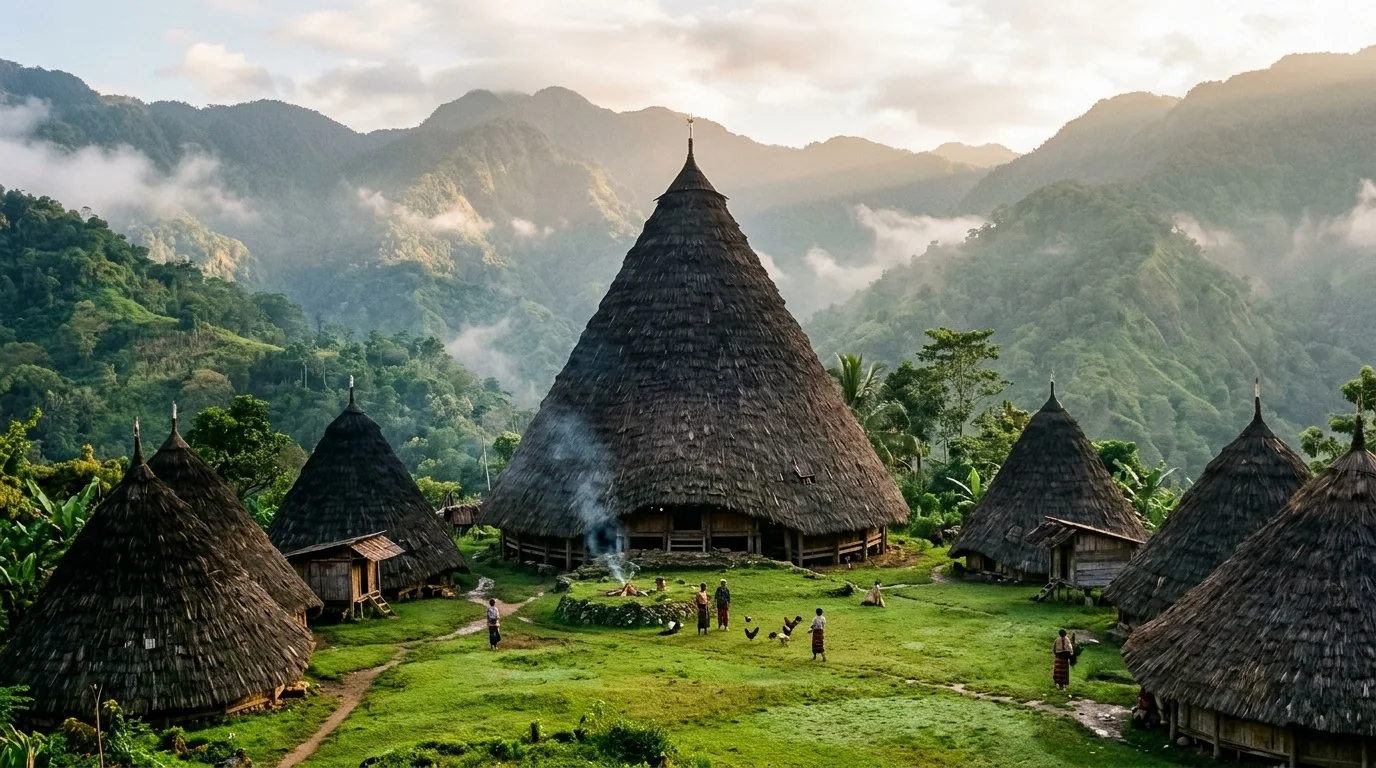
Perched high in the misty highlands of West Flores at 1,200 metres above sea level, Desa Wae Rebo seems almost surreal when you first emerge from the lush mountain trail. Emerging before you are seven enormous, cone-shaped timber dwellings whose thick thatched roofs sweep down from soaring peaks nearly to the green mountain turf. These architectural wonders are known as Mbaru Niang (literally "drum houses").
While many travelers visit on an overnight Open Trip Wae Rebo simply to snap breathtaking photos of the valley, stepping inside a Mbaru Niang reveals deep ancestral cosmology, community engineering, and spiritual reverence. Here is what you need to know about what goes on inside these iconic conical structures.
The Meaning Behind the Cone-Shaped Architecture
In traditional Manggarai culture, architecture is far more than shelter—it is a tangible reflection of cosmic order and unity. The circular foundation and tapering conical shape of the Mbaru Niang symbolize the sacred harmony between the earth, humanity, and the heavens above. Built entirely from timber poles, rattan lashings, bamboo, and layers of palm fibre (ijuk) without a single metal nail, the structure stands resilient against high-altitude winds and seismic tremors.
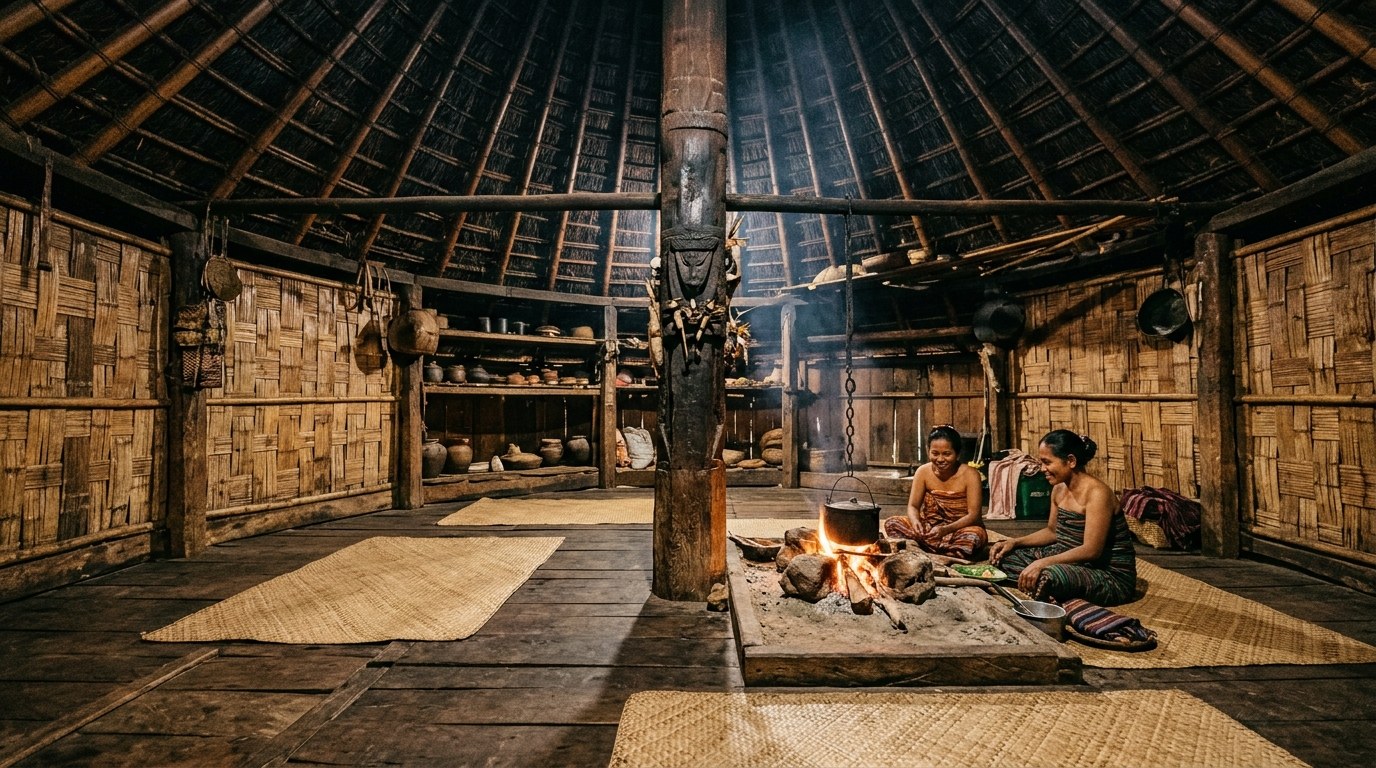
At the very heart of each house stands the tiang ngando, a massive central wooden pillar rooted firmly into the ground. It serves both as the primary structural load-bearer and as the spiritual umbilical cord linking ancestors with living generations.
Exploring the Five Levels of Mbaru Niang
From the outside, the steep thatched roof conceals an ingenious five-storey vertical living layout. Each level (tingkat) serves a distinct practical and symbolic purpose:
- 1. Lutur (Ground Level): The extensive circular ground floor where families reside, prepare food around the hearth, eat, and welcome community members.
- 2. Lobo (Second Level): A circular loft platform directly above the living area utilized for everyday food supplies and cooking staples.
- 3. Lentar (Third Level): A dedicated storage tier where seeds, corn, and agricultural reserves for upcoming planting seasons are carefully safeguarded from dampness and pests.
- 4. Lempa Rae (Fourth Level): Reserved for emergency food stockpiles and provisions kept in reserve to protect the community during failed harvests, droughts, or food shortages.
- 5. Hekang Kode (Fifth Level): The sacred apex directly below the cone roof, reserved exclusively for sacred offerings, heirloom talismans, and honoring ancestor spirits.
The Sacred Waelu Ritual for Welcoming Guests
You cannot simply wander into Wae Rebo and begin snapping photos. Before setting foot in any guest quarters, every visitor is escorted directly to the main clan house, the Mbaru Gendang, to take part in the Waelu'u (or Waelu) ritual.
Conducted by the village elder or custom chief, this brief, heartfelt ceremony involves prayers chanted in the Manggarai tongue asking ancestral spirits for your safety, well-being, and peaceful journey during your stay. A modest customary donation is offered, and only once the blessing concludes are you officially received not as a stranger, but as an honored guest and honorary kin.
What It Feels Like to Sleep Inside a Mbaru Niang
Staying overnight inside a Mbaru Niang is an experience that leaves a lasting impression. Because electricity in the remote village is powered by generator and typically runs only between 18:00 and 22:00, the evening transforms into an intimate, warm setting lit by soft lamps and glowing hearth embers.
Guests rest in communal harmony on hand-woven pandanus mats and provided sleeping pads under warm blankets. Temperatures regularly dip to around 15°C at night, but the dense, tightly woven palm thatch insulates the interior remarkably well, accompanied by the gentle mountain breeze whispering through the timbers.
Etiquette You Need to Know Before Entering
To honor the village elders and preserve the living sanctity of the clan, keep these simple guidelines in mind:
- Wait for Waelu'u: Do not explore private residential zones or photograph sacred items before the welcome ritual is completed.
- Remove your footwear: Always slip off your trekking shoes or sandals before stepping onto the polished wooden floorboards of a Mbaru Niang.
- Dress modestly: Wear modest clothing covering your shoulders and knees while walking through the village courtyard and inside homes.
- Ask before photographing: Always seek friendly permission before capturing candid portraits of elders, children, or women weaving traditional Manggarai songke cloth.
- Pack out your trash: Bring all personal plastic waste back with you to Denge or Labuan Bajo to safeguard the pristine highland environment.
Preserving Manggarai Cultural Heritage
By the early 2000s, many of Wae Rebo's traditional houses were deteriorating, leaving only a few standing. Recognizing the imminent loss of this irreplaceable architectural legacy, the local community partnered with cultural preservationists and the Rumah Asuh Foundation to resurrect all seven conical houses using ancient construction techniques.
In 2012, this community-driven conservation achievement won the prestigious Award of Excellence at the UNESCO Asia-Pacific Awards for Cultural Heritage Conservation. Today, mindful tourism ensures the continuation of ancestral Manggarai customs while providing sustainable livelihood for the highland families.
Sources
- UNESCO Asia-Pacific Awards for Cultural Heritage Conservation (2012 Award of Excellence - Mbaru Niang, Wae Rebo)
- UNESCO World Heritage Centre (whc.unesco.org)
- Wikipedia: Mbaru Niang & Waerebo